Wednesday, 28 April 2021

REFLECTIONS & REFINEMENTS: PHOTOSHOOT

Photoshoot: 12th March 2021

On the 12th of  March, we carried out a photoshoot from the stalker's perspective of our antagonist, Sarah, with a high quality, professional camera. This was so that for our table-top sequence in our dark room scene we could use the photos as a prop, to infer that our stalker had taken and developed photo's to fuel their obsession with Sarah.

We experimented with varying angles and concealed locations that the stalker would have used to capture the photos. We wanted to place emphasis on the fact that the stalker has access to all elements of her personal life, increasing the threat and tension, so we positioned Sarah in typical locations, such as on a bench or walking out of work.

To add to the sense of realism, we used long shots, and created shadows by hiding behind the trees - allowing the audience to infer that the photographer was unnoticed by Sarah.


Filming:

To make it clear it was sinister that she was having pictures taken of her, we also filmed over the shoulder shots from the stalker's perspective, with the intent of editing together the shots and revealing the photo's taken.

However, there were some challenges with this - on our day of filming the sun was shining, so therefore we had to test out different angles to ensure that the sun didn't shine on the camera screen, revealing the stalker's identity in the reflections. We ran into another challenge when shooting Sarah through a window in her 'office'. As it was a long shot and therefore slightly unclear, we had to make sure there was no other barriers between camera and Sarah. This meant that we had to open the window, however it did not fully open and, combined with the glare of the sun, we were unable to see her through the glass. We overcame this by adjusting Sarah's positioning and by using a lower angle in order to have a clearer shot.


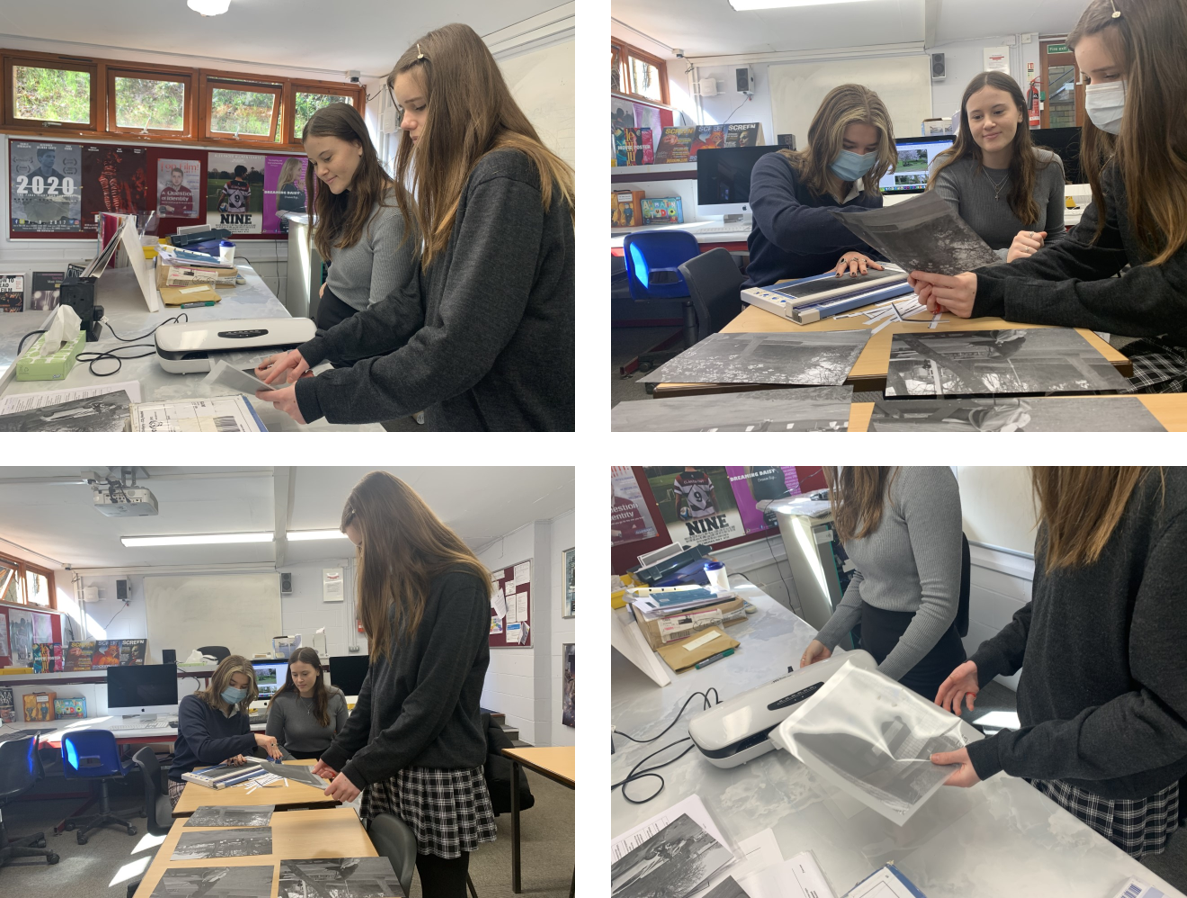
To use the photographs in our table-top sequence, we uploaded and edited the shots on an iMac, using a greyscale to make them look more authentic and to increase the sinister visual codes. We then printed and laminated them, allowing the 'stalker' to later 'develop' them through placing them in solution, the lamination preventing them from being damaged.


Friday, 16 April 2021

PLANNING: Casting


Loading...

Loading...

PLANNING: Risk Assessment

 Risk Assessment

Hazard to Health and Safety

Risk posed and to whom

Risk Level (H/M/L)

Control measure to reduce risk

Further action needed to reduce risk


Transport: Standing in the street in Walton to get the shot of Jess through the window from the stalker’s perspective (could have got hit by a car if we were too focused on shooting). Danger when travelling to destination by car. Moving vehicles (lorries) in school carpark. Students looking wrong way when crossing road. Student falling down stairs. Walking across roads. Be cautious when walking/driving to filming location and be aware of surroundings. Aim to cross roads at designated pedestrian crossings. Always have a person looking for incoming cars.

Weather: In the forest it was slippery due to rain (danger of falling and injuring ourselves). Danger of getting clothing wet and becoming too cold. Wet camera when filming outside. Students bring appropriate clothing suitable for all weather and be cautious when walking on slippery surfaces.

First Aid Issues: Trips/Falls – could trip over in the dark room. Could come into contact with harmful chemicals in the dark room. Brambles in woods. Carry a first aid kit at all times, aim to have a first-aider on stand-by, identify areas of danger (e.g. brambles or chemicals).

General Public (e.g. theft or assault): Outside in the dark on the street (danger of potential assault or kind of incident). Threat of pick-pocking in Walton (not a large risk as we are not in a crowded location). Students causing incident with member of public. Students stay in groups when in public spaces (with mobile phones), do not approach members of public or respond to provoking comments, students to remain in supervised conditions, do not film late at night, follow guidance of emergency personnel.

Accommodation (e.g. risk assessment from centre): No overnight accommodation

Major Public Incident (e.g. terrorism): Not applicable as there is minor chance of a terrorist attack in a small town. In the case of one: Ensure venue has assembly point and pupils know where it is, as well as giving pupils assembly points whilst on public transport. Ensure pupils know the national advice to run if possible and hide if not. Ensure pupils know to always follow police instruction. Issue pupils with printed emergency contact card detailing school landline and school mobile – instruct them to call if they become lost (as well as alerting security official). Ensure trip leader has a school mobile and also contact details for both the school and all pupils + families


RISK ASSESSMENT

HAZARD TO HEALTH AND SAFETY

RISK POSED AND TO WHOM

RISK LEVEL (H/M/L)

CONTROL MEASURE TO REDUCE RISK

Transport

Incoming cars when we stand in the street to get shots of Jess through window from stalker’s perspective. And moving vehicles (e.g. lorries) school car park.


Traveling in car


Crossing roads


Potential injury through getting hit by a car if we were too focused on shooting.


Danger when travelling to destination by car.


Students looking wrong way when crossing road.

H

Always have a person looking for incoming cars. Students to be made aware of risks.


Be cautious when walking/driving to filming location and be aware of surroundings.


Aim to cross roads at designated pedestrian crossings.

Weather

Rain when filming outside making ground slippery and dangerous (especially in forest)


Rain making clothes and camera equipment wet

Rain could cause students to slip and fall – potentially causing injury.


Damage to the camera and risk of students becoming cold.  

M

Students bring appropriate clothing suitable for all weather and be cautious when walking on slippery surfaces.

First Aid Issues

Trips/Falls


Chemicals


Brambles

Could trip over in the dark room.


Could come into contact with harmful chemicals in the dark room.


Brambles in woods – could trip over or cut themselves on

M


L


M

Carry a first aid kit at all times, aim to have a first-aider on stand-by, identify areas of danger (e.g. brambles or chemicals).

General Public

e.g. theft or assault

Assault


Theft


Incidents

Outside in the dark on the street (danger of potential assault or kind of incident).


Threat of pick-pocking in Walton (not a large risk as we are not in a crowded location).


Students causing incident with member of public

L


L


L

Students stay in groups when in public spaces (with mobile phones). No filming late at night.


Filming in supervised conditions.


Students not to approach members of public or respond to provoking comments.

Students to be advised on their responsibilities and school expectations.

Accommodation e.g. risk assessment from centre

N/A (no overnight accommodation)


L


Major Public Incident e.g. terrorism

Not applicable as there is minor chance of a terrorist attack in a small town


L


Thursday, 4 March 2021

DISTRIBUTING MY FILM

 Slide 1 : Research into a distribution campaign by a Hollywood major 

When I researched how a Hollywood major distributed a film I noticed several strands that I could replicate with my budget:. E.g.  digital posters on social media, social media (Facebook, Instagram and twitter). Facebook reaches a different target audience. Traction on radio/newspapers. Film website. Film post card (social media links, phone image, details, contact details) - can be distributed to 

Slide 2 : How a successful independent low budget film presented itself. 

E.g. Bait. Take it to festivals ideally London film festival - (try to get a screening at the BFI) and apply for potential funding , screenings listed (urging for audiences to ask independent cinemas). Film post card (social media links, phone image, details, contact details) - can be distributed to raise awareness for film.

(insert images of Bait - screenshot of festivals page and digital poster)

Tortoise In Love was picked up by the BFI who created a distribution strategy for it which was enormously successful. They paid for posters, assistance to get it screened in small venues across the country (e.g. village halls, schools), a premier/red carpet in Leister Square. 

3 :  Film website like Sorry We Missed You lists screenings and makes it easy for audiences to find screenings; other strategies like viral marketing. Lists screenings online as opposed to high budget posters - easily accessible to old and not as expensive as a huge marketing campaign. Straightforward distribution method. #sorrywemissedyou - links to social marketing on website all helps. 

 4. By looking at the FDA website I have understood that the process of distribution is all about connecting films and audiences.

I learnt from Mark Batey’s (FDA head until 2019) presentation on distribution strategies that I have to identify what genre my film is and what its unique selling point (USP) is.

I understand the important considerations to take when distributing and targeting audiences, such as:

-          What is the film (are there any comparable films and how have they performed/what factors influenced this – work out a positioning for the film and ‘how it will play’)

-          When is it released (important due to the extremely conjected market place *insert statistic pf how many films released per year* so need a good date)

-          How is it released (distribution strategies e.g. posters, social media – how much can we afford to spend on promotion)

-          Who is the target audience?


5. Kezia Williams outlines how useful it is to make a 'comp list' of comparable films to identify the target audience and what will appeal to them and investigate them to understand the target audience as well as adding a new USP that makes audiences specifically want to see that film, more than those similar. Three films that are comparable to ours are:


YOU: psychological thriller/crime

Greta: psychological thriller/horror

Secret Obsession: psychological thriller


6.   The Distribution Process:

I understand that, in the world of independent film, distribution companies tend to work on a territory by territory basis. Meaning that a UK distributor will by the film for the UK and the right to arrange for distribution in all media (cinemas, DVD, video-on-demand, television, airlines, etc.) in the UK only. A French company will buy the film for France. A German company will buy for Germany. This continues for all the territories around the world. The distributor makes decisions as to when and how it will release the film, what sort of marketing campaign it will create and how much it will pay for marketing expenses, which are known as P&A (for prints and ads) in the case of territory distribution. The distributor is responsible for the financial success of the film in its territory.

7. UK Film Distributers: Verve and Warp

When distributing our film, we will pick a UK film distributor to connect our film with audiences. Ideally, we might like to be distributed by…

1.    8. Audience Research: conducted via a questionnaire

I designed and distributed an audience questionnaire via google forms to further investigate my target audience. My aim was to better understand their preferences, in order to help my production team and I effectively market and distribute our film according to what our target audience needs and enjoys. Through the use of Google Forms, I was able to collect data that I will be able to present in both graphical forms and words, as I asked questions that yielded both quantitative and qualitative data. I also tailored my questionnaire to fit the kind of film my production team are planning on creating, so asked questions unique to the genre we are developing: psychological thriller/horror. When I received my results, I was able to then utilise the insights I had gained to unsure our film was able to meet the needs of our target audience and therefore be as successful as possible.

1.      

Wednesday, 3 February 2021

SEMIOTICS

 Semiotics

A brief summary of what I learnt in the Roland Barthes Media Theory Semiotics Analysis video.

Semiotics: the study of the meaning of signs and the way we make sense of everything around us.

Semiotics are all about understanding different signs that area used, decoding what they mean, and understanding why a producer has decided to use them. 

Signs: are something that we can infer meaning from - a signifier, (e.g. symbols, colours and camera angles). There are two types of meaning that can come from signs: 


Denotation: literal meaning of signs

Connotation: signified/associated meaning of signs 

For example, the apple technology company logo's could be denoted as its literal meaning - a large apple with a bite out of it. However, most people will associate the logo with connotations of the multinational company (mass-consumerism, high-technology equipment, or our own iPhones).

How we understand meaning depends on our ideology, background and culture. Signs are polysemic, they have multiple meanings. Therefore, people can read signs in different ways. 


Signs in moving image:

Language is where we infer most of our meaning from in media texts but we can still understand texts through other signs within...

The video illustrates this with an example from the film 'Terror for Tokyo', which is in Japanese and therefore audiences are pushed to use other signs to understand the plot. Mise-en-Scene, Editing, Camerawork and the use of sound all help to express clear signs. For example, narrow corridors and bare walls create a claustrophobic, yet exposed atmosphere, heightening the terror felt by the innocent girl, which audiences empathise with. Complimenting this, the camera angles of the scene include many wide-shots and fish eye shots, which work to disorientate the audience, exaggerating the panic felt in the scene, as well as emphasising how small and vulnerable the girl is. Extended shots hold tension and anticipation for the audience. Editing also helps to create meaning through motivated edits from the girls terrified eyes to the door, implying the threat behind. Finally, the use of sound also contributes to creating meaning through tone and expression held in the voice on the other side of the door. This means that despite not understanding the language, the audience can easily infer the sense of aggression and danger that comes from the voice. 


There are 4 categories of signs we look for in film:

1.    1.  Mise en Scene: everything within the scene (set, costume, hair, makeup)

2.     2. Sound: music, sound effects, voice, tone and even a lack of sound all convey meaning

3.     3. Camerawork: framing, composition, angles, movement

4.     4. Editing: use of sequencing, cutting (moving from one shot to another)


Signs are selected by media producers to create specific meanings and construct representations. The selection of a particular sign can determine the huge influence it has on audiences. 

When a sign is used consistently, Roland Barthes' theory argues that a sign can become a myth. For example, bulldogs are an accepted sign that symbolise Winston Churchill and Britain.  

A myth: the widely accepted meaning of a sign, accepted dominant connotation.

Naturalisation: the process of establishing myths - media shaping societies ideology through repeated use of signs.

Thursday, 10 December 2020

CONSTRUCTION: Recording sound effects

 - recorded ambient sounds (e.g. bird noises)

- branches breaking, snapping

- running through leaves

- brushing past bushes

- footsteps in crunching leaves

WELCOME MODERATOR

  ELLIE SMART  CANDIDATE NUMBER 1859 CLAREMONT FAN COURT SCHOOL 64680 My production team included: Charlotte Coppellotti 1812, Jess Foster 1...